Dentists warn that the risk for tooth cavities rise as people age. The article below discusses the factors that can increase a person’s risk of getting tooth cavities and the ways to maintain a tooth-friendly diet which is key to overall dental health.
It may come as a surprise, but even older adults can still get cavities.
Alice Boghosian, a dentist in Niles, Ill., says she was working on an 87-year-old patient recently when she discovered a cavity and exclaimed, "You have got to be kidding me."
Boghosian, a consumer adviser for the American Dental Association, was not surprised by the patient's age. She was surprised because the patient was her own mother. "Luckily, I was able to save the tooth," she says — something she cannot always do for her older patients.
Adults of all ages need to know, dentists say, that cavities are not just for kids. The risk can even rise as we age.
"It's as much a problem in seniors as it is in kids," says Judith Jones, a professor of general dentistry, health policy and health services research at Boston University.
It's also a more persistent threat now that most aging adults keep at least some of their teeth. Just 50 years ago, more than half of people over age 65 in the United States had lost all their teeth and needed dentures, Jones says. More recent data find 15% of people ages 65 to 74 and 22% of those over 75 are toothless, according to the federal Centers for Disease Control and Prevention.
But those with teeth don't always have healthy teeth: more than 20% of people over age 65 had untreated cavities in 2008, CDC says. Poor people, men and non-whites were especially at risk.
Cavities can lead to pain, infection and tooth loss. They also can come as quite a shock for aging adults, says Christine Downey, a clinical assistant professor of dental ecology at University of North Carolina at Chapel Hill.
Downey, who also is on the adjunct faculty of Duke University, says: "Many a person has come into my office saying, 'I always had really nice teeth and now I'm getting cavities. What's going on?' "
Here are some of factors that might be at play:
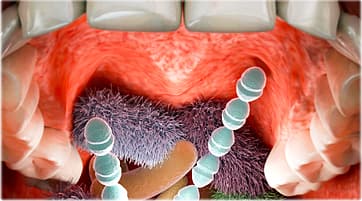
• Diet — especially sugar. Sugar is bad for your teeth whether you are 7 or 70. When you eat or drink sugar, bacteria in your mouth produce acid. That acid breaks down the protective enamel on teeth, allowing decay. Eating acidic foods, such as citrus fruits, also can damage enamel.
• Dry mouth. It's a side effect of more than 500 medications, including many commonly used by older adults, the dental association says. "Our saliva has a cleansing, anti-cavity effect," Boghosian says.
• Recessed gums. When you are "literally long in the tooth," decay is more likely to reach tooth roots, Jones says.
• Delayed care. Many people lose their dental insurance when they stop working and then stop going to the dentist, Jones says. Dental care is not covered by Medicare; Medicaid coverage varies state to state.
• Cognitive and health challenges. People with dementia may forget to brush or "don't care about it," and caregivers may not take up the slack, Downey says. Lost dexterity and other physical problems also can get in the way of dental hygiene, she says.
Cavity prevention, at any age, means brushing with a fluoride toothpaste at least two times a day, for two minutes at a time, plus flossing and regular dental visits, dentists say.
Some people need to take extra steps, such as using stronger prescription fluoride toothpastes and oral moisturizing products, Downey says.
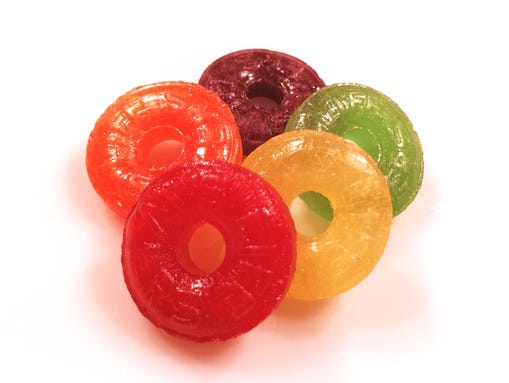
Foods that are sticky and sweet, such as these Lifesavers, can be promote tooth decay at any age.
And everyone can benefit from watching what they eat and drink. Here are Boghosian's tips for a tooth-friendly diet:
• Recognize sugar in all its forms. Scan labels for honey, corn syrup, dextrose, fructose and other sweets, she says: "It's all sugar."
• Watch out for sticky foods. Dry fruit, caramels and other sticky sweets can promote decay. Even bread or crackers that stick to teeth can convert to sugar and cause trouble.
• Don't nurse sweet drinks or candies. Sipping a sweet tea or sucking hard candy for hours keeps your teeth bathed in sugar.
• Limit acidic foods. Citrus fruits and juices count. So do sodas, even if they are sugar-free.
• Drink water, and make it fluoridated tap water when you can. Swish water around your mouth after eating sweet, sticky or acidic foods.
• Keep up your calcium intake, with milk, yogurt, cheese and leafy greens. That can help rebuild enamel.
Dr. Domenick Coletti is a dental surgeon who currently practices at the Central Maryland Oral & Maxillofacial Surgery, a facility that provides expert oral and maxillofacial surgery procedures including oral pathologies and treatments for facial injuries, facial pain, and fractures. Click here to schedule a consultation or to learn more about the clinic’s dental services and procedures.