Friday, May 10, 2013

From barbers to doctors: A brief history of dentistry

The concern over dental hygiene is not a modern issue. In fact, today’s dentists are practitioners of an ancient discipline that began way before Moses supposedly crossed the Red Sea.

Though dentistry may have begun earlier, the earliest evidence of dental procedures were found in Egypt. Skulls dated from circa 2,900 BC have been excavated with small holes in the jaws near the teeth’s roots. These holes may have been used for draining abscesses. Meanwhile, the earliest dentist may have been Hesi-Re (ca 3,000 BC), whose burial chamber was inscribed with “the greatest of those who deal with teeth [chief toother], and of the physicians.” By 1,500 BC, Egyptian dentists were creating false teeth made from teeth connected by a gold wire around the gum line.

Image source: citizenscientistsleague.com

In the Western world, Aristotle was among the first to have made a comparative study of teeth. Meanwhile, the Romans adapted the use of a “chewstick” from the Chinese and the Babylonians for cleaning teeth. The Roman physician Celsus was noted as the first to have used fillings for cavities in 30 AD.


Image source: rompedas.blogspot.com

The Early Middle Ages saw dentistry-related duties fall to the monks who were the most learned in science and medicine at the time. But following a series of Papal edicts that forbid monks from performing any kind of surgery, barbers assumed the monks’ surgical responsibilities. 

Dentistry became separated from general surgery in the 1700s when Pierre Fauchard published Le Chirurgien Dentiste, or The Surgeon Dentist. In it, he discussed all that was known of dentistry at the time, as well as the dental conditions and treatments for each. In doing so, he began to lay down the framework of modern dentistry, earning him the recognition as the “Father of Modern Dentistry.”


Image source: wikipedia.org

Developments in science and technology went hand in hand with dentistry in developing procedures and techniques that were safer and more effective than those previously employed. Today, dentists continue the legacy of their ancient predecessors, and use advanced machines and equipment for various procedures that ensure that patients have strong and healthy teeth.


Dr. Domenick Coletti of Central Maryland Oral and Maxillofacial Surgery is an expert in a variety of dental procedures, such as pre-prosthetic surgery and wisdom teeth extraction. Follow this Twitter page for links to dentistry news and other information.

Friday, April 5, 2013

REPOST: Two Important Lessons from My Much-Procrastinated Trip to the Dentist

Many people have an aversion to visiting the dentist.  But the experience has its perks, and can teach a thing or two about teeth and more.  In her Forbes article, writer Gretchen Rubin shared the epiphany she had during a trip to the dentist.


Yesterday, I finally went to the dentist. I was due for a check-up in July, and for the last eight months, I’ve been moving the reminder card around my office and coming up with new excuses about why I couldn’t make an appointment.

I made the appointment last Thursday, went in, and the whole process took thirty-eight minutes from the time I picked up a magazine in the waiting room to the time I walked out the door holding my bag with freebie toothbrush and floss. I walked the twenty-five blocks to get there, too, on this beautiful spring afternoon, so even half of my travel time was well-spent.

From this experience, I draw two lessons for myself — both of which were quite apparent to me, although I neglected to act on them:
  •  Procrastination is itself draining. That reminder card cluttered up my office and cluttered up my brain. Repeatedly thinking “I should…no, I’ll wait…but I really should…but not now…I’ll do it later…” etc. just weighs me down. Just do it! Or decide when I’ll do it, and then do it when that time comes.  
  • I have plenty of time for the things that are important to me. I kept telling myself, “I don’t have time to go to the dentist.” Really? For eight months? During that time, I went on vacation, got my hair cut, met friends for coffee, and went on kindergarten field trips, so clearly I’m not so pressed for time that I can do nothing but work. The fact is, it wasn’t a priority — which is fine. But I should be honest with myself.
I’ve found that saying “I’m too busy” makes me feel harried and distracted. Now, instead, I tell myself, “I have plenty of time for the things that are important to me.” It’s more important to me to go to the bread factory with the kindergarten class than to go to the dentist. That’s my choice. But telling myself that I “don’t have time” makes me feel out of control.

Do you find that procrastinating makes you feel drained and overwhelmed? And yet it’s so hard just to do those things which ought to be done, without delay. Two of my Twelve Personal Commandments are Do it now and Do what ought to be done, and yet I struggle with this mightily.

* I keep thinking about this post from Love That Max — “a blog about kids with special needs (and the parents who adore them).” In Helping kids with special needs fit in: I did not buy the purple Crocs, Ellen wrote about deciding not to buy the purple Crocs that she knew her son would love like crazy, to help him in a way that he couldn’t see. I think this is an issue for all parents — resisting the delight of doing something that will make our children very happy, in the present, out of love.


Based in Maryland, Dr. Domenick Coletti is an expert in many surgical procedures, including placement of dental implants and corrective jaw surgery.  This Twitter page contains more details about his work.

Thursday, March 14, 2013

On corrective jaw surgery


Image Source: chibuttidallatorre.skyrock.com


The entertainment industry has dictated the world that to have a jaw like Johnny Depp’s or Brad Pitt’s is bliss, which is why many people think that corrective jaw surgery is only for those who want to be as handsome as the aforementioned celebrities and, needless to say, for those who have money to afford it.

But for oral and maxillofacial experts, like Dr. Domenick Coletti and Dr. Dennis G. Smiler, turning a person’s physiognomy, at times, is a matter of death and life, for they are chiefly doing this kind of surgery not just to change one’s appearance, but also to help patients who are suffering from different illnesses, like sleep apnea, and deformities, like TMJ disorders and malocclusion problems.


Image Source: worldsbestinformation.org


On the surgeons

However, many people also think that oral and maxillofacial surgeons are nothing but dentists who happen to have better pay. Indeed, they are dentists, too. The only thing difference is that they are trained to operate the human mouth, jaw, and face—a very technical method that requires a high level of preparation and training.


Image Source: faceandjawsurgeryblog.com


Talking about the price

The price of corrective jaw surgery is not that cheap, but it is not that costly either. In addition, the total cost for this procedure depends on several factors, including the severity of the injury and the patient’s insurance plan. For patients who suffered from an appearance-rescinding accident, the procedure is surely worth the price.


Dr. Domenick Coletti is a partner at Central Maryland Oral and Maxillofacial Surgery, P.A. Learn more about the dental surgeries he performs by visiting this website.

Monday, February 4, 2013

Sleep apnea: Searching for the best treatment

More than 18 million American adults are suffering from sleep apnea, a potentially serious sleep disorder in which breathing repeatedly stops and starts. This condition, which starves the body of oxygen, can lead to heart conditions, high blood pressure, and mood and memory problems. The most common form of the condition is obstructive sleep apnea, in which the airway collapses or becomes blocked during sleep, causing shallow or interrupted breathing.

Image source: parkcities.bubblelife.com


It is important for people with this life-threatening disorder to seek medical attention immediately. For those with mild sleep apnea, lifestyle changes such as losing weight, quitting smoking, and not drinking alcohol before bedtime can reduce the occurrence of the condition. Some are advised to wear dental appliances, like a mouth guard, which repositions the mandible (lower jaw) and keeps the airway open.

Image source: flplahore.blogspot.com


Others, particularly those with severe apnea, turn to surgery for relief. A recent ABC Action News report featured how Susan Yeats of Florida turned to surgery to treat her sleep apnea. Yeats noted that the surgery, which is originally performed to correct jaw relationship problems, improved her breathing and reduced the occurrence of her sleep apnea.

Image source:cbc.ca


Called maxillomandibular advancement or MMA, the surgery is deemed a “radical procedure” for it moves the mouth, tongue, and chin forward permanently to enlarge the airway. The surgery, isn’t for everyone with sleep apnea, especially those doing well with continuous positive airway pressure or CPAP, the gold standard of treatment for mild to severe apnea. But for Yeats and others who are desperate to get a permanent fix to their sleep apnea, the surgery seems like a viable alternative.

This website provides information on the various treatment options for sleep apnea offered at Central Maryland Oral and Maxillofacial Surgery, P.A.

Monday, January 7, 2013

REPOST: A New Strategy To Prevent Or Halt Periodontal Disease Suggested By Research

Periodontitis, in its most severe form, can severely impact systemic health. Now, scientists from the University of Pennsylvania have demonstrated ability in a mouse model to prevent periodontitis from developing and halt its progression, according to this news article from Medical News Today.

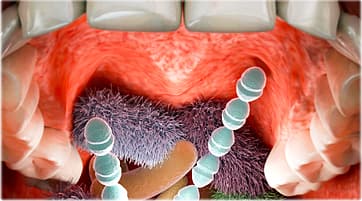
Periodontitis, a form of chronic gum disease that affects nearly half of the U.S. adult population, results when the bacterial community in the mouth becomes unbalanced, leading to inflammation and eventually bone loss. In its most severe form, which affects 8.5 percent of U.S. adults, periodontitis can impact systemic health.

By blocking a molecular receptor that bacteria normally target to cause the disease, scientists from the University of Pennsylvania have now demonstrated an ability in a mouse model to both prevent periodontitis from developing and halt the progression of the disease once it has already developed.

The study, published in the Journal of Immunology, was led by Toshiharu Abe, a postdoctoral researcher in the Department of Microbiology in Penn's School of Dental Medicine. Abe works in the lab of George Hajishengallis, a professor in the department who was a senior author on the paper. The co-senior author was John D. Lambris, the Dr. Ralph and Sallie Weaver Professor of Research Medicine in the Department of Pathology and Laboratory Medicine in Penn's Perelman School of Medicine. Kavita B. Hosur and Evlambia Hajishengallis from Penn Dental Medicine also contributed to the research, as did Penn Medicine's Edimara S. Reis and Daniel Ricklin.

In previous research, Hajishengallis, Lambris and colleagues showed that Porphyromonas gingivalis, the bacterium responsible for many cases of periodontitis, acts to "hijack" a receptor on white blood cells called C5aR. The receptor is part of the complement system, a component of the immune system that helps clear infection but can trigger damaging inflammation if improperly controlled.

By hijacking C5aR, P. gingivalis subverts the complement system and handicaps immune cells, rendering them less able to clear infection from the gum tissue. As a result, numbers of P. gingivalis and other microbes rise and create severe inflammation. According to a study published last year by the Penn researchers, mice bred to lack C5aR did not develop periodontitis.

Meanwhile, other studies by the Penn group and others have shown that Toll-like receptors, or TLRs - a set of proteins that also activate immune cell responses - may act in concert with the complement system. In addition, mice lacking one form of TLR called TLR2 do not develop bone loss associated with periodontitis, just like the C5aR-deficient mice.

In the new study, the Penn team wanted to determine if the synergism seen by other scientists between the complement system and TLRs was also at play in this inflammatory gum disease.

To find out, they injected two types of molecules, one that activated C5aR and another that activated TLR2, into the gums of mice. When only one type of molecule was administered, a moderate inflammatory response was apparent a day later, but when both were injected together, inflammatory molecules increased dramatically - soaring to levels higher than would have been expected if the effect of activating both receptors was merely additive.

This finding suggested to the scientists that the Toll-like receptor signaling was somehow involved in "crosstalk" with the complement system, serving to augment the inflammatory response. Turning that implication on its head, they wondered whether blocking just one of these receptors could effectively halt the inflammation that allows P. gingivalis and other bacteria to thrive and cause disease.

Testing this hypothesis, the researchers synthesized and administered a molecule that blocks the activity of C5aR, to see if it could prevent periodontitis from developing. They gave this receptor "antagonist," known as C5aRA, to mice that were then infected with P. gingivalis. The C5aRA injections were able to stave off inflammation to a large extent, reducing inflammatory molecules by 80 percent compared to a control, and completely stopping bone loss.

And when the mice were given the antagonist two weeks after being infected with P. gingivalis, the treatment was still effective, reducing signs of inflammation by 70 percent and inhibiting nearly 70 percent of periodontal bone loss.

"Regardless of whether we administered the C5a receptor antagonist before the development of the disease or after it was already in progress, our results showed that we could inhibit the disease either in a preventive or a therapeutic mode," Hajishengallis said.

This is significant for extending these findings to a potential human treatment, as treatments would most likely be offered to those patients already suffering from gum disease.

Because not all cases of periodontitis are caused by P. gingivalis, the research team also wanted to see whether C5aRA could effectively prevent or treat the disease when it arose due to other factors. To do so, they placed a silk ligature around a single molar tooth in a group of mice. The obstruction not only blocked the natural cleaning action of saliva, but also enabled bacteria to stick to the ligature itself, resulting in a massive accumulation of bacteria. This microbial build-up rapidly leads to periodontitis and bone loss, within just five days in the mice.

The researchers then injected the gum tissue adjacent to the ligated molar tooth with C5aRA in some of the mice, and gave the other mice a control.

"These mice that got the C5a receptor antagonist developed at least 50 percent less inflammation and bone loss compared to an analog of C5a receptor antagonist which is not active," Hajishengallis said.

This result gives the researchers greater confidence that the C5aRA treatment could be effective against periodontitis in general, not just those cases caused by P. gingivalis bacteria.

The team is now working to replicate their success in mice in other animal models, an important step toward extending this kind of treatment to humans with gum disease.

"Our ultimate goal is to bring complement therapeutics to the clinic to treat periodontal diseases," Lambris said. "The complement inhibitors, some of which are in clinical trials, developed by my group are now tested in various periodontal disease animal models and we hope soon to initiate clinical trials in human patients."

Based in Columbia, MD, Dr. Domenick Coletti specializes in oral and maxillofacial surgery. Check out this Facebook page to learn more about Dr. Coletti’s expertise.

Sunday, December 9, 2012

Evolving areas in oral and maxillofacial surgery

Image credit: perfectdental.eu.com


There are a vast number of accidents that happen in the world on a given time. Surgeons like Dr. Domenick Coletti suggest that as facial and neck injuries associated with interpersonal violence increase, the demand for high-quality medical service also escalates. Medical specialties, such as oral and maxillofacial surgery, are continuously being improved to avoid prolonged physical disabilities and reduce death tolls.

Key areas in oral and maxillofacial surgery that are currently evolving include the following:

Osteo-distraction
This procedure aims to make cuts in the bone without actually moving it at the time of surgery. To achieve this, distracters are applied and the bone is lengthened slowly over several weeks. Slowing the bone’s growth means that there is also enough time for soft tissues to grow, thus minimizing the movements of the bones.

Image credit: stmaryhealthcare.org


Navigational technology
This technique uses computer and CT modeling to precisely position bones or prosthetic implants of the facial skeleton during the time of surgery. The use of this procedure can optimize the final result and lessen the complications or the need for further procedures.

Microvascular surgery
This procedure involves a highly advanced way of removing tissue from one part of the body and transferring it to another. Although this technique is already well-established, many factors are still being considered to ensure it efficacy and safety.

Implantology
Now approaching more than four decades of availability, facial prostheses and bone-anchored hearing aids are some of today’s most readily used procedures in oral and maxillofacial surgery. Optimization of the functional and cosmetic results from these procedures is currently developing fast and reliable.

Image credit: cdn.whatclinic.com


Visit this website for more information on oral and maxillofacial surgery.

Monday, November 12, 2012

ScienceLine: Why Do We Have Wisdom Teeth?

By ScienceLine's Rachele Cooper. 2007.


Not just a year ago my wisdom was tucked tightly away in my mouth, just below the surface of my gums, bothering no one. And then, last fall, it decided to emerge in the shape of three large, impacted teeth that had to come out. As I lay under the dental surgeon’s tools over the holidays, slowly coming out of my anesthesia, I wondered to myself: where did these teeth come from?
Anthropologists believe wisdom teeth, or the third set of molars, were the evolutionary answer to our ancestor’s early diet of coarse, rough food – like leaves, roots, nuts and meats – which required more chewing power and resulted in excessive wear of the teeth. The modern diet with its softer foods, along with marvels of modern technologies such as forks, spoons and knives, has made the need for wisdom teeth nonexistent. As a result, evolutionary biologists now classify wisdom teeth as vestigial organs, or body parts that have become functionless due to evolution.
Why do wisdom teeth wait to erupt long after the tooth fairy has stopped leaving change under your pillow? Tooth development, from baby primary teeth to permanent teeth, takes place in an organized fashion, over a course of years, with the first molar erupting around the age of six and the second molar erupting around the age of 12. Wisdom teeth, which begin forming around your tenth birthday, are the last set of molars on the tooth-development timeline, so they usually don’t erupt until you are between the ages of 17 and 25. Because this is the age that people are said to become wiser, the set of third molars has been nicknamed “wisdom teeth.”
Some people never get wisdom teeth, but for those who do, the number may be anywhere from one to four – and, on very rare occasions, more than four, according to a study published in the Journal of the Canadian Dental Association. Scientific literature has yet to be able to explain why the number of teeth per individual varies, but for those who do get these extraneous, or supernumerary, teeth, it can lead to all sorts of problems.
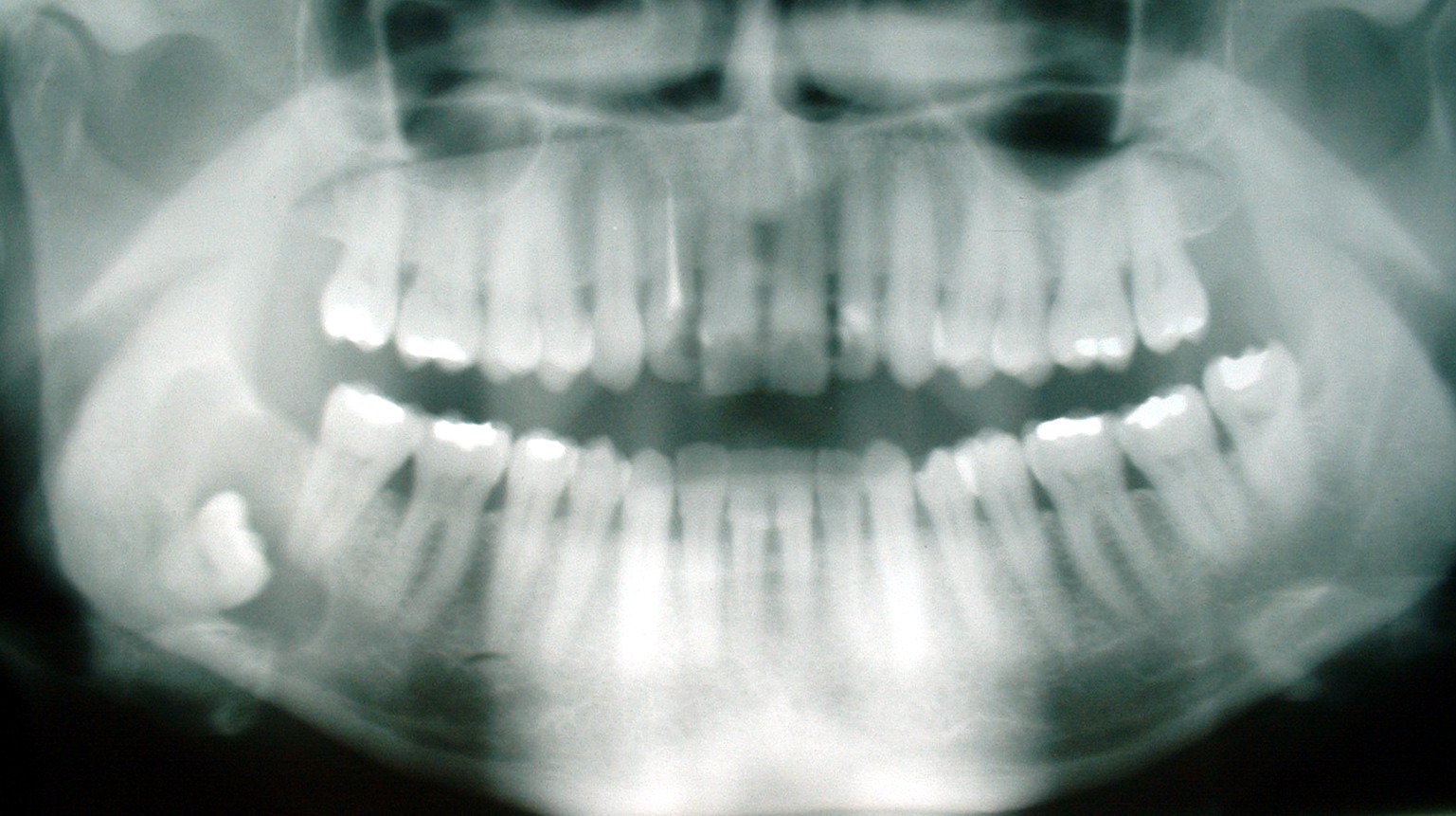
Because human jaws have become smaller throughout evolutionary history, when wisdom teeth form they often become impacted, or blocked, by the other teeth around them. Also, if the tooth partially erupts, food can get trapped in the gum tissue surrounding it, which can lead to bacteria growth and, possibly, a serious infection.
Wisdom teeth that do not erupt but remain tucked away can also lead to oral problems, such as crowding or displacement of permanent teeth. On very rare occasions, a cyst (fluid filled sac) can form in the soft tissue surrounding the impacted wisdom tooth. These cysts can lead to bone destruction, jaw expansion, or damage to the surrounding teeth. Even more uncommonly, tumors can develop in the cysts, which can lead to the jaw spontaneously breaking if the tumor or cyst grows too much.
There are patients that develop wisdom teeth that function just as well as every other tooth in the mouth, and as a result they do not need to go under the knife. But no one can predict when third molar complications will occur, and the American Association of Oral and Maxillofacial Surgeons estimates that about 85 percent of wisdom teeth will eventually need to be removed.
If you do have wisdom teeth that you are thinking of having taken out, the association strongly recommends that patients remove wisdom teeth when they are young adults, in order to “prevent future problems and to ensure optimal healing.” People who have oral surgery after the age of 35 have higher risks for complications, harder surgeries, and longer healing times than those who get them removed in their late teens or early 20’s. The best time to get those suckers out is when the roots are about two-thirds formed, which is generally between the ages of 15 to 18. Though I was…well, a lady never tells her age, but suffice it to say that for me, a weeks long lack of locution and a diet of soup and applesauce was worth no longer having pain in my jaw and food in my teeth.